


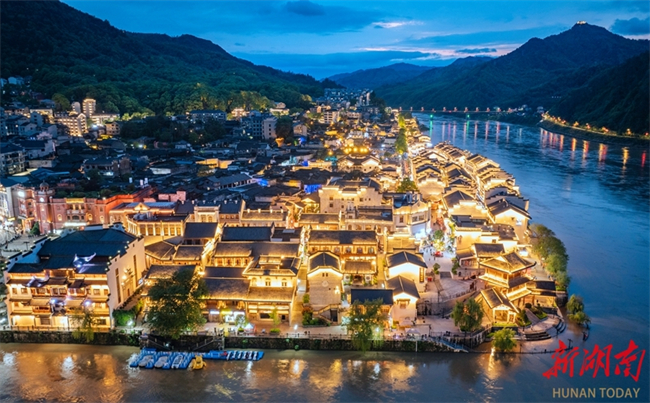
The Hongjiang Ancient Commercial Town in Huaihua City is illuminated in bright colors, outlining the unique charm of this thousand-year-old commercial hub. The ancient town now houses over 380 buildings dating from the Ming and Qing dynasties (1368–1911) to the Republic of China period (1911-1949), forming a layout with "Seven Alleys, Eight Lanes, and Nine Streets." Once famous for its trade in tung oil and timber, it was known as "Little Nanjing" and the "Imperial Palace of Chinese Commerce." (Photo/Li Jian, Hunan Daily)
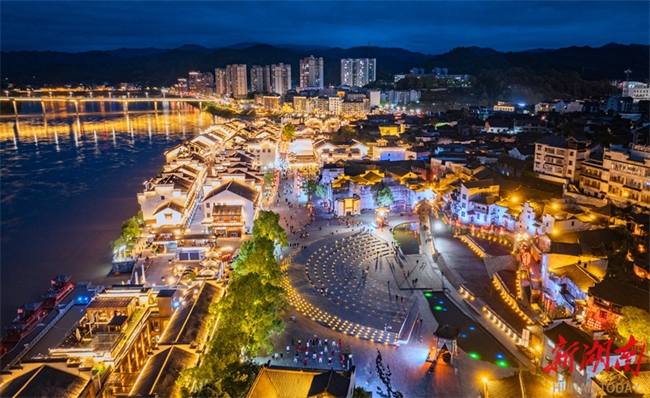
The Hongjiang Ancient Commercial Town in Huaihua City is illuminated in bright colors, outlining the unique charm of this thousand-year-old commercial hub. The ancient town now houses over 380 buildings dating from the Ming and Qing dynasties (1368–1911) to the Republic of China period (1911-1949), forming a layout with "Seven Alleys, Eight Lanes, and Nine Streets." Once famous for its trade in tung oil and timber, it was known as "Little Nanjing" and the "Imperial Palace of Chinese Commerce." (Photo/Li Jian, Hunan Daily)
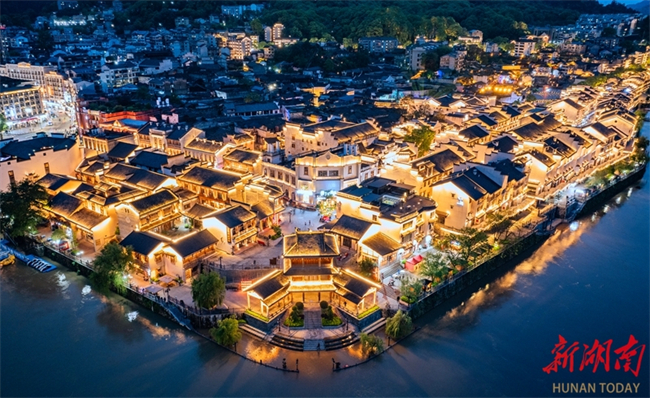
The Hongjiang Ancient Commercial Town in Huaihua City is illuminated in bright colors, outlining the unique charm of this thousand-year-old commercial hub. The ancient town now houses over 380 buildings dating from the Ming and Qing dynasties (1368–1911) to the Republic of China period (1911-1949), forming a layout with "Seven Alleys, Eight Lanes, and Nine Streets." Once famous for its trade in tung oil and timber, it was known as "Little Nanjing" and the "Imperial Palace of Chinese Commerce." (Photo/Li Jian, Hunan Daily)
This article is from Hunan Provincial Government. www.enghunan.gov.cn.
Translator: Pang Yuehui
Chinese source: hunantoday


