


Recently, a major cultural micro-documentary series "The Asian Century—Season Two," produced by the CICG Asia-Pacific, officially premiered online. The sixth episode, "Hello Zhangjiajie," filmed with the assistance of the Zhangjiajie International Communication Center, turns its lens on Zhangjiajie. Using Zhangjiajie's spectacular mountains and waters as a link, the episode vividly tells the story of over two decades of people-to-people friendly exchanges between Zhangjiajie and South Korean tourists.
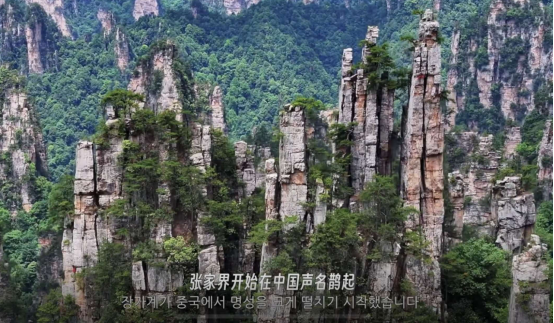
This documentary adopts a nuanced, observational approach with internationally accessible storytelling. Through a realistic and multidimensional narrative perspective, the documentary focuses its lens on one ordinary staff member at the scenic area. Based on her routine work—such as welcoming visitors and providing frontline services—and her firsthand stories with tourists, the production vividly illustrates the contemporary significance of tourism as a vital vehicle for people-to-people exchanges between China and South Korea, and profoundly showcases more than two decades of mutual engagement. These repeated encounters—which have transcended geographical and linguistic barriers—stand as a powerful testament to the connectivity and deep integration between the two peoples.
As a high-quality cultural documentary series rooted in Asia and reaching out to the world, "The Asian Century" has consistently centered on the theme of building an Asian community with a shared future. Through vivid and authentic stories, it delves deeply into the profound historical ties, diverse cultural heritage, and shared visions for future development among Asian countries. The series presents a comprehensive picture of the positive momentum among Asian nations—where they share weal and woe, engage in mutual learning, and advance together—offering a vivid and compelling visual record to promote dialogue among Asian civilizations and deepen regional friendly cooperation.
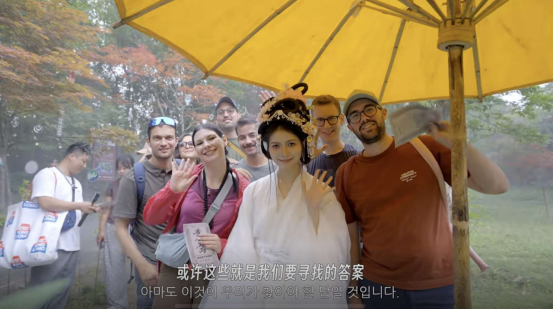
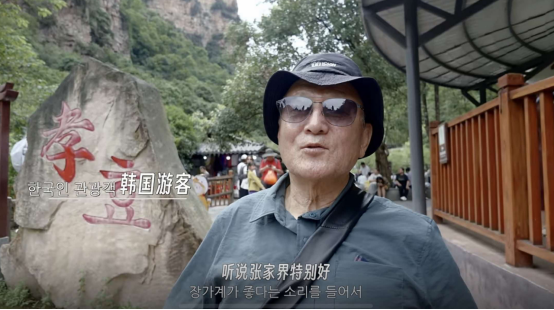
Zhangjiajie is one of the most popular Chinese tourist destinations among South Korean tourists. The massive influx of inbound tourists not only highlights the international influence of Zhangjiajie's cultural and tourism industry, but also continuously drives the successive upgrades and improvements in quality and efficiency of the city's tourism service system. Over the years, Zhangjiajie has consistently strengthened its capabilities in serving international visitors. Frontline staff at scenic areas have honed their Korean language skills, and tour guide teams have tailored their services to precisely match the sightseeing pace and service needs of international tourists. Meanwhile, Zhangjiajie has continuously improved supporting facilities—including transportation connections, scenic area guidance, and travel conveniences—striving to build a standardized, refined, and internationalized model for cultural and tourism services. After two decades of welcoming and seeing off visitors, Zhangjiajie and South Korean tourists have deepened mutual understanding and built emotional bonds through countless heartwarming interactions, fostering a sincere and profound people-to-people friendship.
In the future, Zhangjiajie will continue to build on its world-class tourism resources, continuously improve the quality of its international services, and expand the scope of its cultural and tourism exchanges with the outside world. With its natural landscapes as a bridge and people-to-people bonds as a link, the city will write a new chapter in people-to-people friendship between China and South Korea, help deepen cultural tourism cooperation in Asia, and promote exchanges and mutual learning among Asian civilizations.
This article is from the Hunan Provincial Government www.enghunan.gov.cn.
Translator: Xiao Juan
Chinese source: hunantoday




 Hunan PSB Cyber Security Filing: No. 43010302000524