


From July 5 to 12, the 2026 International Youth Intangible Cultural Heritage Study Tour (Hunan Chapter), also known as the American Youth Summer Camp for Hunan Intangible Cultural Heritage Study Tour, was held in Hunan. The event was organized by the Hunan Provincial Department of Culture and Tourism, with joint participation from the Greater Washington Chinese American Community, the World Intangible Cultural Heritage Conservation Center, and other organizations. A delegation of American youth embarked on an 8-day, 7-night journey that included visits to Changsha, Loudi, Xiangxi Tujia and Miao Autonomous Prefecture, and Zhangjiajie, where they experienced the charm of Hunan's intangible cultural heritage and natural landscapes.
Centered on "intangible cultural heritage study and exchange," this study tour focused on Hunan's cultural history, agricultural civilization, ethnic craftsmanship, natural heritage, and urban cultural tourism experiences. The delegation visited iconic venues and sites such as Yuelu Academy, Hunan Museum, Hunan Yuhua Intangible Cultural Heritage Hall, Ziquejie Terraced Fields, Fenghuang Ancient Town, Shibadong Village, and Zhangjiajie National Forest Park. Through guided tours, interactive experiences, hands-on crafting, folk culture observations, and nature excursions, the participants had a better understanding of Hunan's intangible cultural heritage and its distinctive cultural and tourism features.

Overseas youth learn Nvshu or women's script at the Hunan Yuhua Intangible Cultural Heritage Hall.
In Changsha, the delegation visited the thousand-year-old Yuelu Academy to explore Huxiang culture. Participants listened attentively to the academy's thousand-year development history, gaining insight into the spiritual essence of "the Kingdom of the Chu, the home of talents." At the Hunan Museum, an array of artifacts from the Mawangdui Han Tombs vividly brought to life the brilliance of Han Dynasty civilization, allowing the overseas youth to appreciate the enduring legacy of traditional Chinese culture up close. At the Hunan Yuhua Intangible Cultural Heritage Hall, immersive experiences like tie-dyeing, shadow puppet performances, fans with Nvshu characters, and traditional oil-paper umbrella making enabled everyone to experience traditional crafts firsthand.
"I had only seen traditional Chinese crafts in books before. It is amazing to make them with my own hands. Each craft embodies the unique romance and wisdom of the East," an American youth shared his insights, with the help of an interpreter.
As night fell, the delegation took a boat cruise on the Xiangjiang River and strolled through Taiping Old Street and Pozi Street, experiencing Changsha's urban character that blends historical heritage with trendy vitality amidst its fusion of ancient and modern cityscapes.
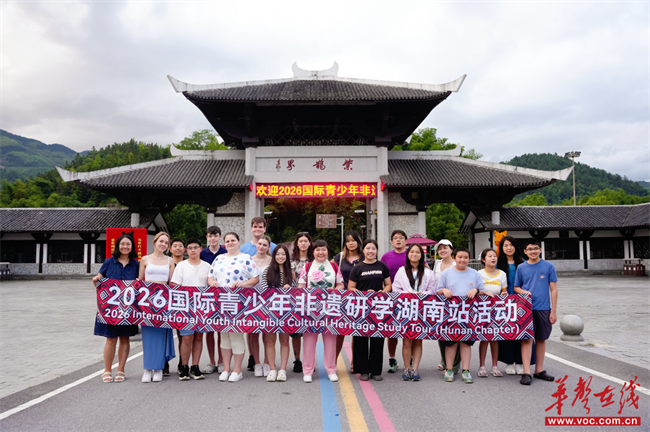
The delegation arrives at the Ziquejie Terraced Fields.
The delegation's visit to Xinhua County in Loudi explored the mysteries of ancient agricultural civilization. At the Ziquejie Terraces—a Globally Important Agricultural Heritage System—layers upon layers of terraces stretch along the mountainside. The thousand-year-old gravity irrigation system operates without external force, using natural water flow. This demonstrated the ancient people's wisdom in adapting to nature and making the most of local conditions, which left the participants in awe. "These terraces are truly spectacular. It's amazing that the ancient people were able to build such a perfect irrigation system without machinery. I'm deeply moved by the concept of harmony between humans and nature," remarked a participant.
Subsequently, the delegation traveled to Xiangxi Tujia and Miao Autonomous Prefecture, visiting distinctive sites like Fenghuang Ancient Town, Shibadong Village, and Furong Town. The murmuring Tuojiang River, the stilted houses along the riverbanks, the rustic Tujia and Miao villages, along with unique displays of ethnic craftsmanship, painted a living picture of traditional village preservation, ethnic cultural heritage, and high-quality integrated development of culture and tourism in Xiangxi.
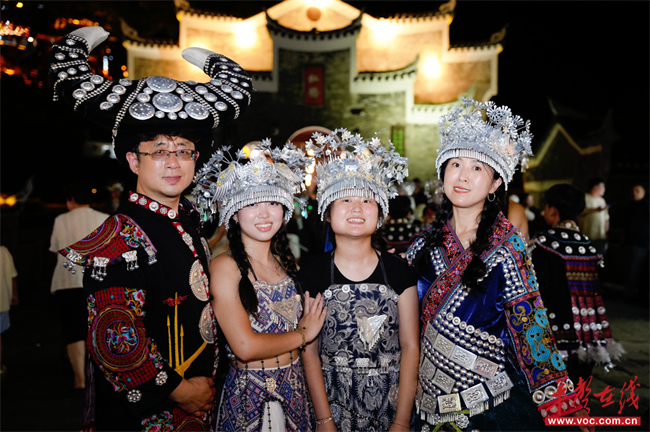
Study tour members try on ethnic costumes to experience local culture.
At the Shibadong Miao Embroidery Base, colorful Miao embroidery works with intricate patterns drew visitors in for a closer look. Miao embroidery is a national-level intangible cultural heritage. Under the hands-on guidance of representative inheritors of this intangible cultural heritage, participants threaded needles and patiently stitched, discovering the ethnic totems, life stories, and the legacy of time embedded in the Miao embroidery patterns. "The Miao embroidery patterns are incredibly exquisite, and each design has a unique meaning. This is a unique symbol of ethnic culture. It is very precious," said a participant who had experienced Miao embroidery.
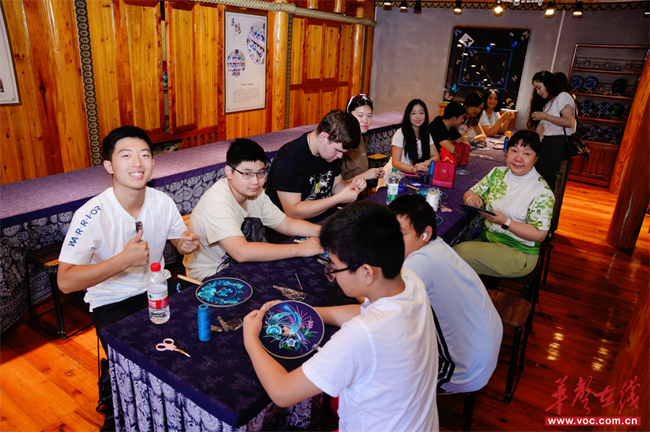
Participants try their hand at Shibadong Miao embroidery.
The breathtaking scenery of mountains and waters captivates visitors. In Zhangjiajie, the delegation successively visited core scenic areas like Yuanjiajie, Tianzi Mountain, Golden Whip Stream, and Qixing Mountain. The towering and peculiar quartz sandstone peak forest, alongside the serene and picturesque gorges and streams, fully displayed the stunning beauty of this World Natural Heritage site, immersing the overseas youth in the grandeur and splendor of Hunan's landscapes.
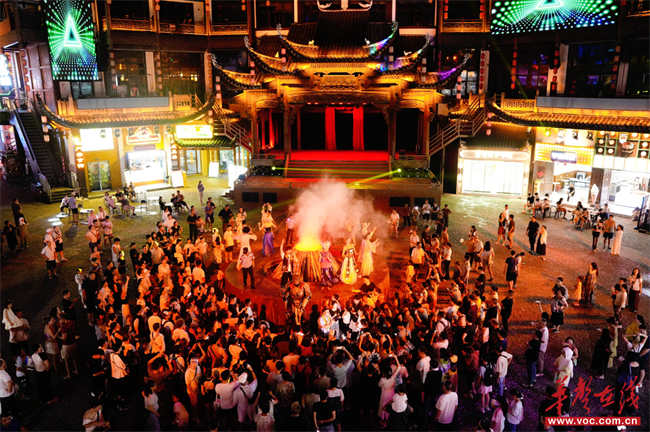
The study tour group joins a bonfire party at the 72 Unusual Houses Cultural Tourism Town in Zhangjiajie.
In addition to sightseeing, the delegation also visited a Tujia brocade experience site to observe the weaving process of Xilankapu, a national-level intangible cultural heritage. Standing beside the traditional looms, they experienced the ingenuity and charm of Tujia people's thousand-year-old textile craftsmanship.
This study tour was not only a cultural and tourism experience in Hunan for international youth but also an important initiative to promote cultural exchange and mutual learning between Chinese and American youth. Through a week of in-depth study, the American youth gained insights into Hunan, learned about its intangible cultural heritage, and experienced fine traditional Chinese culture in real scenarios. Through interactive exchanges, they also deepened their understanding of China's history, ethnic culture, and contemporary development. During the event, cultural and tourism departments across the province ensured reception arrangements, guided tours, transportation access, safety measures, and on-site coordination, fully showcasing Hunan's open, inclusive, friendly, and hospitable image in cultural and tourism services.
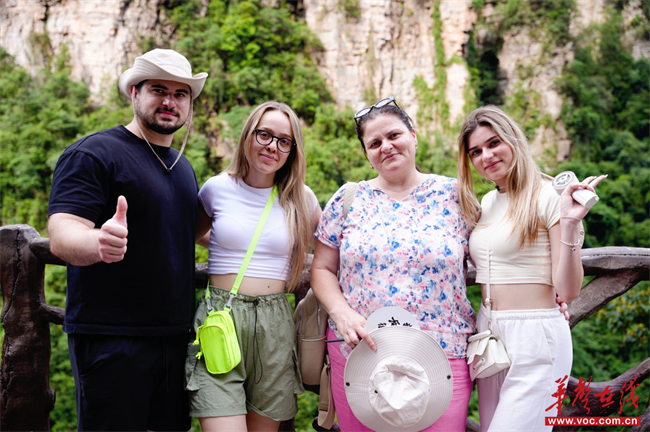
Study tour members pose for a photo in Zhangjiajie. (Photos above were provided by the organizers)
Looking ahead, Hunan will continue to leverage intangible cultural heritage study tours, international exchanges, and cultural tourism integration as key drivers, encouraging more overseas youth to visit, understand, and fall in love with Hunan. This will further enhance the international communication of Hunan's intangible cultural heritage and the influence of Huxiang culture, contributing Hunan's strength to fostering exchanges and mutual learning between China and the rest of the world.
This article is from Hunan Provincial Government. www.enghunan.gov.cn.
Translator: Xiao Juan
Chinese source: Voice of Hunan




 Hunan PSB Cyber Security Filing: No. 43010302000524